
Grandmaster Yu Chenghui's Two
Handed Sword
This is not a simple collection of lessons, but access to one of the rarest and most fascinating traditions in Chinese martial arts. Thanks to our collaboration with the Jinan Two-Handed Sword Research and Promotion Center, we are the only ones offering this official course.
Access the introductory First Section for free, discover the fundamentals of the form, and begin your journey into a complete program consisting of over 40 lessons, technical insights, and advanced teachings.
Start Now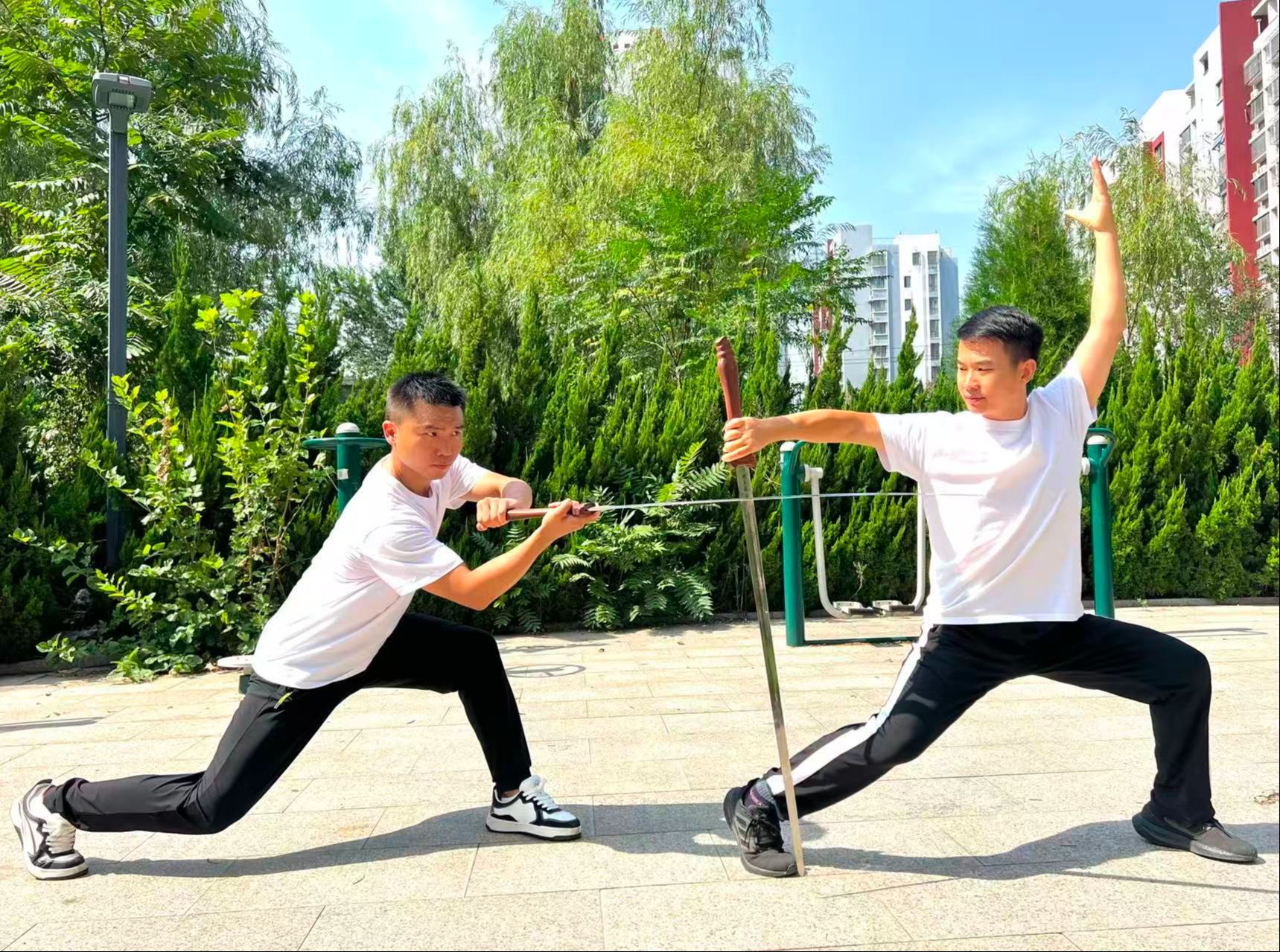

ZhanZhuang QiGong: Inner Balance
The most powerful and transformative practice you could wish for to improve the quality of your life. Learn the posture that contains all the postures of the universe. Learn to ground yourself, connect with your Qi, and flow with the natural rhythms of your body and mind.
Davide De Santis began studying this method in 1998, becoming a student of Wang YuFang, daughter of the founder of Yi Quan, the great master Wang Xiangzhai. After Wang YuFang’s passing, Davide continued his training with several other students of Wang Xiangzhai, including Yu YongNian, Bai JinJia, and Han.
He later focused on the third generation of practitioners, deepening his studies with the children and students of Yao ZongXun (one of Wang Xiangzhai’s most accomplished disciples). Among them were Guo GuiZhe, Cui RuiBing, Xue, Sui YunMing, and the twin brothers Yao ChengGuan and Yao ChengRong, with whom he also collaborated for several years.
LEARN MORETaiJiQuan XinShen: Harmony in Motion
Merge the principles of the most important Taoist internal styles and obtain a distillate to increase fluidity, balance, and animal strength. Evolve your martial arts practices.
Davide De Santis deepens his study of Taiji in the XinShen style at the "temple of fire and cloud", located about 200 km from Beijing. Under the guidance of Wang Tingjun and Sui Yunming, De Santis is introduced to this particular style of Taiji that integrates the principles of Bagua and XingYi. His excellent ZhanZhuang skills earn him acceptance as an Upāsaka monk (lay devotee) at the temple.
LEARN MORE
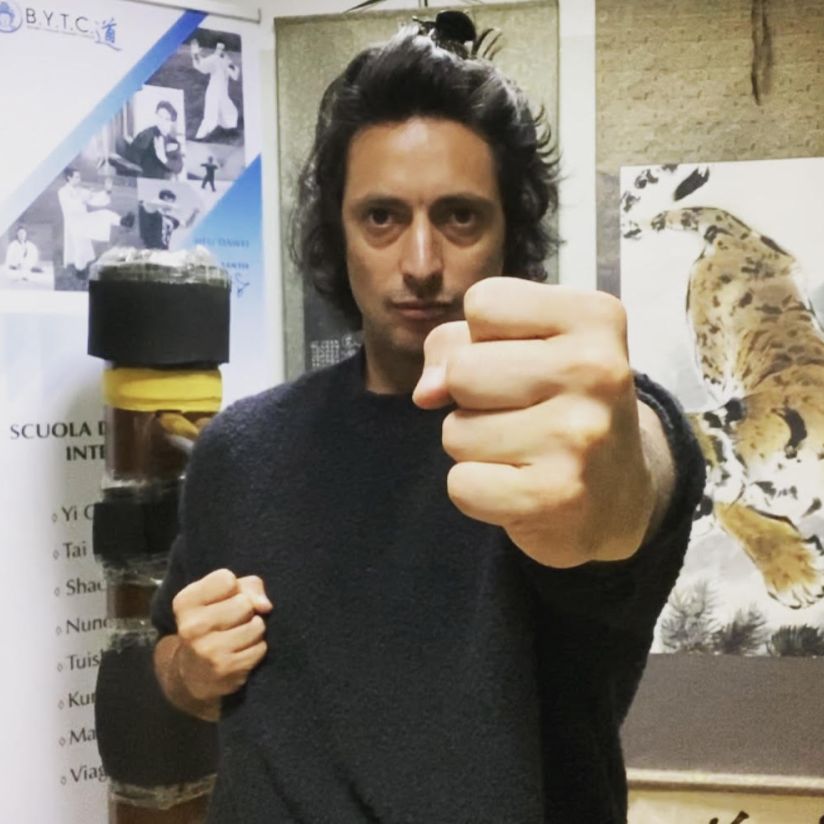
Xiao Nian Tou: The Foundation of Combat
First Form — The entire essence of Wing Chun begins with a “Little Idea.” Through ten sequences, you will develop structure, centerline control, and the fundamental principles that give Wing Chun its effectiveness and power.
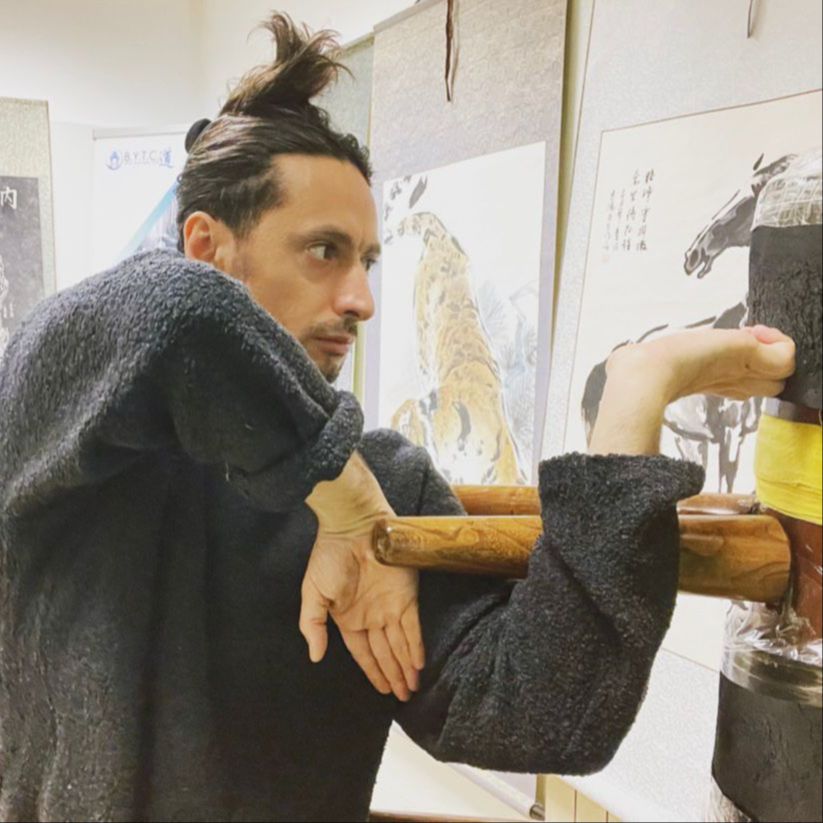
Chum Kiu: Harmonizing Arms and Legs
Second Form — An internal mechanism to unlock, integrating the upper and lower body into a single coordinated system. Through Wing Chun, you learn to move arms and legs simultaneously, developing unity, balance, and power in motion.
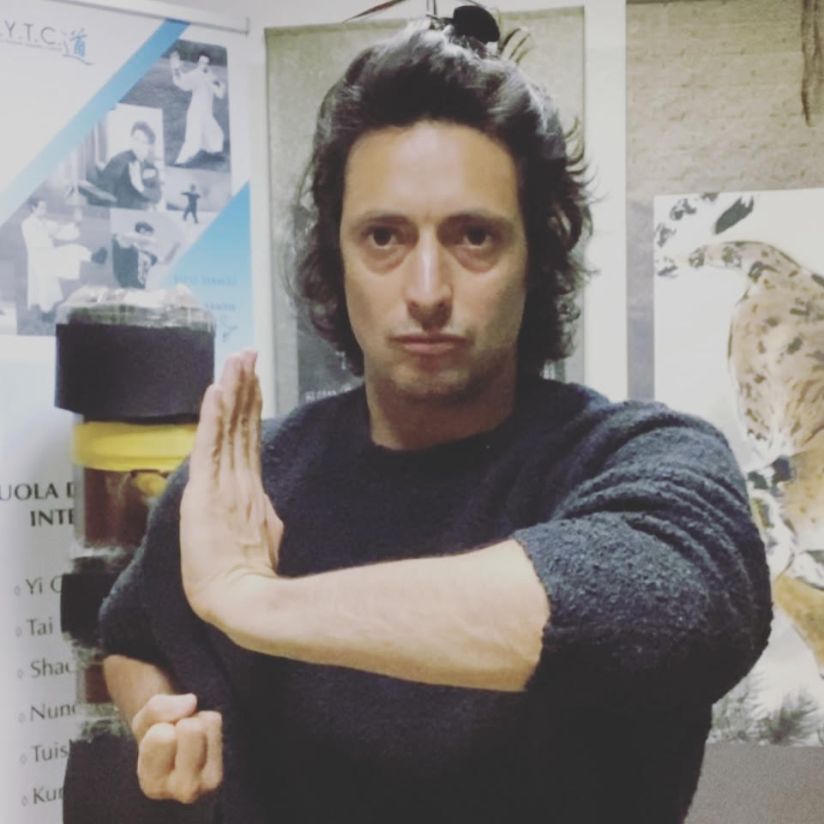
Biu Jee: Defense and Counterattack
Third Form — The most advanced layer of Wing Chun. A method for protecting the centerline under pressure and counterattacking with the whole body, transforming the way you approach combat and recovery in motion.
